• Highlights from ESMO 2023
  • Podcast Series: Discussions on NCCN Guidelines for MCL and CLL
  • Case Study: How Would You Treat…
  • Podcast Series: Discussions on CLL
  • And the Diagnosis is…
  • Highlights from ASCO 2024: Focus On Endometrial Cancer
  • HRD Testing in Advanced Ovarian Cancer
  • Patient-Matched Tumor-Normal Sequencing
  • Transforming colorectal cancer management with tumor informed ctDNA testing

Advanced Search

  • Featured:
  • Genomic Profiling in Advanced Cancer Therapy Selection
  • Highlights from ESMO 2026
  • Challenge One
  • Challenge Two
  • Challenge Three
  • Challenge Four

  • 1 Decision 1
  • 2 Decision 2
  • 3 Decision 3
Decision 2

Decision 2

Patient history: Samuel, a 79-year-old patient with MM, returns for an oncology consultation at 9 months after the initiation of DRd. He is considered ineligible for autologous stem cell transplantation. The patient achieved partial response (PR) at month 6 and very good partial response (VGPR) at month 8. He has continued treatment with DRd, with a reduced dexamethasone dose of 12 mg/week. Samuel developed an upper respiratory infection 2 months after initiation of therapy, which resolved after treatment with levofloxacin. He has continued thromboprophylaxis, herpes zoster prophylaxis, and trimethoprim/sulfamethoxazole for the duration of the DRd treatment.

  • Comorbidities: Type 2 diabetes mellitus, controlled with medications and diet. Samuel is underweight and his daily functioning status is consistent with baseline (ECOG performance status II).
  • Current presentation: Laboratory results show that Samuel has maintained VGPR. His anemia and hypercalcemia resolved after treatment with DRd was initiated. Chemistry values indicate deterioration of renal function (CrCl: 45 mL/min, serum creatinine: 2.0 mg/dL). Hematology results indicate thrombocytopenia (platelets: 65,000 per mcL).
  • Challenge: Samuel complains about adverse reactions related to his treatment regimen, including increased fatigue, lower extremity edema, and difficulty urinating. His primary care provider is concerned about the risk of chemotherapy-induced renal failure and hematologic complications, and has referred Samuel for an oncology consultation.

Choose your next step:

Continue

References:

1. Lakshman A, Rajkumar SV, Buadi FK, Binder M, Gertz MA, Lacy MQ, et al. Risk stratification of smoldering multiple myeloma incorporating revised IMWG diagnostic criteria. Blood Cancer J 2018; 8:59.

2. Rajkumar SV. Multiple myeloma: 2022 update on diagnosis, risk stratification, and management. Am J Hematol 2022; 97:1086-1107.

3. Palumbo A, Chanan-Khan A, Weisel K, Nooka AK, Masszi T, Beksac M, et al; CASTOR Investigators. Daratumumab, Bortezomib, and Dexamethasone for Multiple Myeloma. N Engl J Med 2016; 375:754-66.

4. Ali MA, Ahmed YA, Ibrahim A. Clinical challenges: Myeloma and concomitant type 2 diabetes. South Asian J Cancer 2013; 2:290-5.

5. De Stefano V, Larocca A, Carpenedo M, Cavo M, Di Raimondo F, Falanga A, et al. Thrombosis in multiple myeloma: risk stratification, antithrombotic prophylaxis, and management of acute events. A consensus-based position paper from an ad hoc expert panel. Haematologica 2022; 107:2536-2547.

  • Previous
  • Next

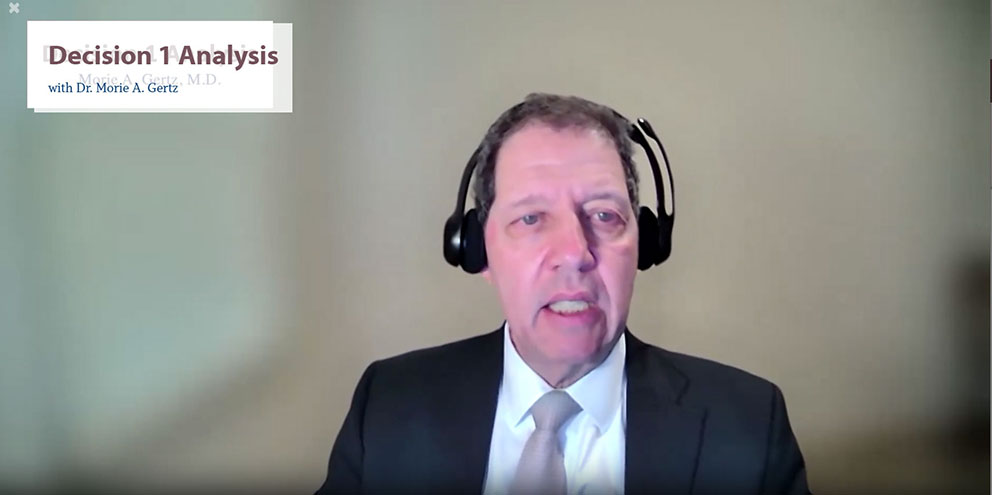
Decision 1 Analysis

with Dr. Morie A. Gertz

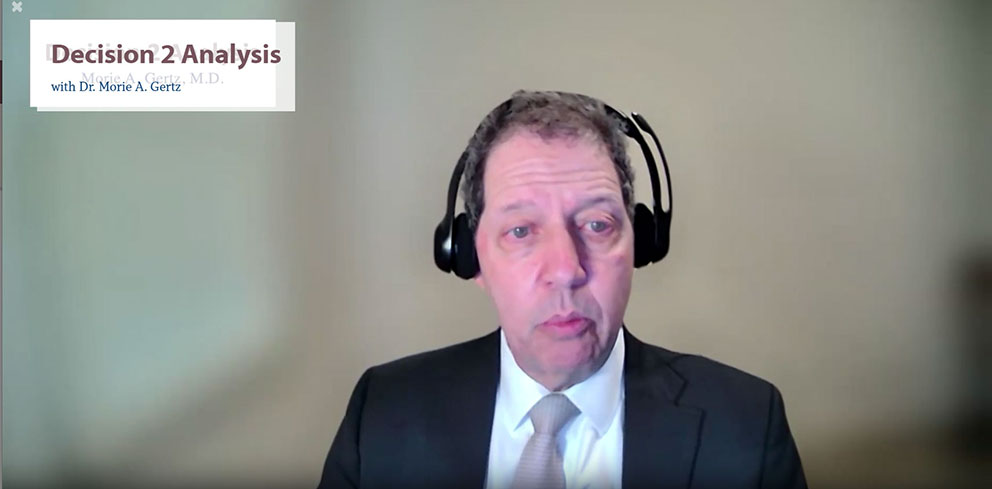
Decision 2 Analysis

with Dr. Morie A. Gertz

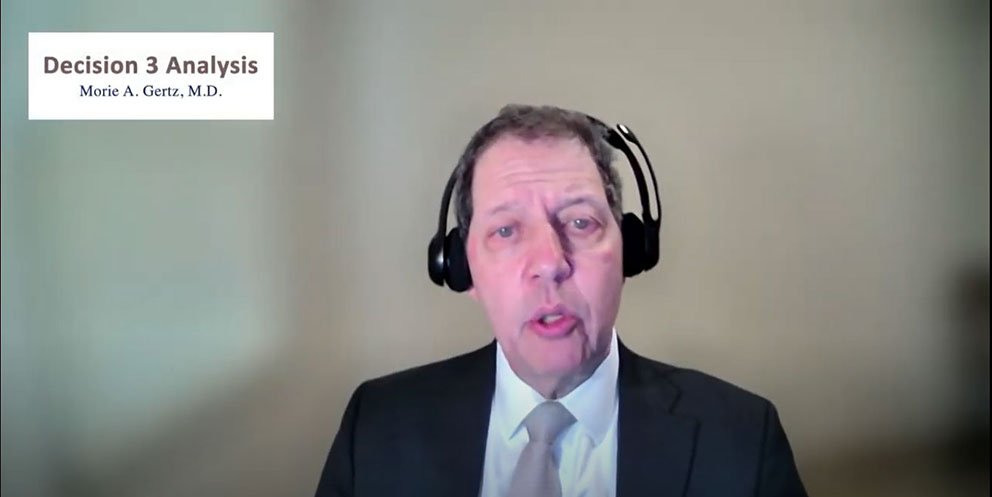
Decision 3 Analysis

with Dr. Morie A. Gertz

© Copyright 2026. All Rights Reserved. Privacy Policy |

Wolter Kluwer